# IT (English)

# E-mail


# Email Configuration

<div id="bkmrk-the-generic-paramete"><div><div><div>The generic parameters for configuring email clients for all email addresses with the domain @[co.it.pt](http://co.it.pt/ "http://co.it.pt") are as follows.</div></div></div></div>### Incoming settings

<div id="bkmrk-protocol-imap-server"><table border="0" style="width: 57.7778%; height: 242.172px;"><tbody><tr style="height: 29.7969px;"><th class="align-center" style="width: 36.6051%; height: 29.7969px;">**Protocol**</th><td class="align-center" style="width: 63.2712%; height: 29.7969px;">IMAP</td></tr><tr style="height: 29.7969px;"><th class="align-center" style="width: 36.6051%; height: 29.7969px;">**Server Name**</th><td class="align-center" style="width: 63.2712%; height: 29.7969px;">imap.co.it.pt</td></tr><tr style="height: 29.7969px;"><th class="align-center" style="width: 36.6051%; height: 29.7969px;">**Security**</th><td class="align-center" style="width: 63.2712%; height: 29.7969px;">SSL</td></tr><tr style="height: 29.7969px;"><th class="align-center" style="width: 36.6051%; height: 29.7969px;">**Port**</th><td class="align-center" style="width: 63.2712%; height: 29.7969px;">993</td></tr><tr style="height: 46.5938px;"><th class="align-center" style="width: 36.6051%; height: 46.5938px;">**Authentication Method** </th><td class="align-center" style="width: 63.2712%; height: 46.5938px;">*Password* (normal)</td></tr><tr style="height: 46.5938px;"><th class="align-center" style="width: 36.6051%; height: 46.5938px;">**User**</th><td class="align-center" style="width: 63.2712%; height: 46.5938px;">&lt;your email&gt; (for example, jferreira@co.it.pt)</td></tr><tr style="height: 29.7969px;"><th class="align-center" style="width: 36.6051%; height: 29.7969px;">***Password***</th><td class="align-center" style="width: 63.2712%; height: 29.7969px;">&lt;your password&gt;</td></tr></tbody></table>

</div><div id="bkmrk-">  
</div>### Outgoing settings

<div id="bkmrk-protocol-smtp-server"><div><table border="0"><tbody><tr><th class="align-center">**Protocol**</th><td class="align-center">SMTP</td></tr><tr><th class="align-center">**Server Name** </th><td class="align-center">smtp.co.it.pt</td></tr><tr><th class="align-center">**Security**  
</th><td class="align-center">STARTTLS</td></tr><tr><th class="align-center">**Port**</th><td class="align-center">587</td></tr><tr><th class="align-center">**Authentication Method** </th><td class="align-center">*Password* (normal)</td></tr><tr><th class="align-center">**User**</th><td class="align-center">&lt;your email&gt; (for example, jferreira@co.it.pt)</td></tr><tr><th class="align-center">***Password***</th><td class="align-center">&lt;your password&gt;</td></tr></tbody></table>

</div></div>## Webmail

You can access IT's webmail through [https://webmail.co.it.pt](https://webmail.co.it.pt/)

# Webmail

<div id="bkmrk-the-webmail-system-i">The webmail system is based on [Zimbra](http://www.zimbra.com/open-source "http://www.zimbra.com/open-source"), that has the following features:  
</div><div id="bkmrk-">  
</div>- Self organizing folders
- Fast, advanced (in messages and attachments), writable, multi-folder searches
- Conversation view with multi-folder support
- Filters
- Full calendar
- Rich Web interface, multi-platform - browser and operating system
- Ubiquitous Access - Anywhere, Any Device
- Secure attachment access with no need for additional software
- Collaborative system based on modern technologies

You can access DEEC's webmail through [https://webmail.co.it.pt](https://webmail.co.it.pt/)

# Networks & Connectivity


# Eduroam Configuration

<div id="bkmrk-the-telecommunicatio"><div>The Telecommunications Institute is covered by a wireless network, thus allowing transparent and fast access to the network and the Internet.</div><div>  
</div><div>Two networks are available, whose names (SSID) are IT-Coimbra and EDUROAM. The IT-Coimbra network has local addressing common to the wired IT network, allowing access to the resources there (for example, printers). The EDUROAM network is integrated into the European network, so it only allows access to the Internet and not to local resources. Both are configured in the same way, which will be described below.</div><div>  
</div><div>Regarding technical specifications, the definitions to be used for network access are as follows:</div></div><div id="bkmrk-">  
</div><div id="bkmrk-definition-descripti">  
<table align="center" border="0" cellpadding="5" cellspacing="1"><tbody><tr><th align="left" class="align-center">**Definition**</th><th align="left" class="align-center"><div><div>**Description**</div></div></th><th align="center" class="align-center">**Value to set**</th></tr><tr><td class="align-center">Wireless Type</td><td class="align-center">Types of wireless networking technology that supports wireless networking</td><td class="align-center">802.11 a/b/g/n  
Bandwidth up to 900Mbps per space  
Support for 2.4GHz and 5GHz frequencies</td></tr><tr><td class="align-center">SSID</td><td class="align-center">Wireless Network Name</td><td class="align-center">IT-Coimbra / EDUROAM</td></tr><tr><td class="align-center">Wireless Protection</td><td class="align-center">Wireless Encryption System Type</td><td class="align-center">WPA 2 (AES/CCMP, Dynamic)</td></tr><tr><td class="align-center">Authentication  
(802.1X)</td><td class="align-center">Method of authenticating a device / user to a protected network</td><td class="align-center">EAP-PEAP + MSCHAPv2</td></tr><tr><td class="align-center">Certificate Validation</td><td class="align-center">Digital Certificate Verification and Validation System</td><td class="align-center">Do not check / Disabled</td></tr><tr><td class="align-center">Login</td><td class="align-center">Login of the user who wants to connect to the network</td><td class="align-center">Email address with the format @it.uc.pt (for example, user@it.uc.pt )  
</td></tr><tr><td class="align-center">Password</td><td class="align-center">Password of the user who wants to connect to the network</td><td class="align-center">Password of the respective account</td></tr></tbody></table>

<div>In case of difficulty, you can contact the Helpdesk service, through the helpdesk@co.it.pt address.</div></div>

# Security


# Authentication and Account Password

<div id="bkmrk-it-has-a-centralized">IT has a centralized authentication system, that is, a unique identification system, which allows all its users to access the various informed services, using the same authentication credentials - the same username and password.  
</div><div id="bkmrk-">  
</div><div id="bkmrk-given-the-degree%C2%A0of-">Given the degree of criticality of this keyword, which allows access to multiple computer services, were used according to the following rules:</div><div id="bkmrk--0">  
</div><div id="bkmrk---a-keyword-must-hav">- A keyword must have at least eight characters and three different variants (uppercase, lowercase, numbers and punctuation);</div><div id="bkmrk---the-password-must-">- The password must be renewed periodically by the user;</div><div id="bkmrk--1">  
</div><div id="bkmrk-you-can-change-your-">You can change your password at [https://password.co.it.pt](https://password.co.it.pt/)</div>

# VPN


# OpenVPN

OpenVPN offers a flexible VPN solution to ensure the security of communications data, whether to guarantee privacy on the Internet or remote access by employees to the internal resources of organizations.

# VPN installation manual on windows

### OpenVPN Installation, Configuration and Run Guide on Windows

### **Introduction:**  


This document will present, step by step, the installation, configuration and execution of OpenVPN on the Windows operating system.

**Preparation:**

<div id="bkmrk-before-starting-the-">Before starting the installation and configuration of OpenVPN on your computer, you should check the following point:</div>- <div>Have an account for the configuration of OpenVPN, which is requested from the Management Office of the Computer Network.</div>

### **Installation:**

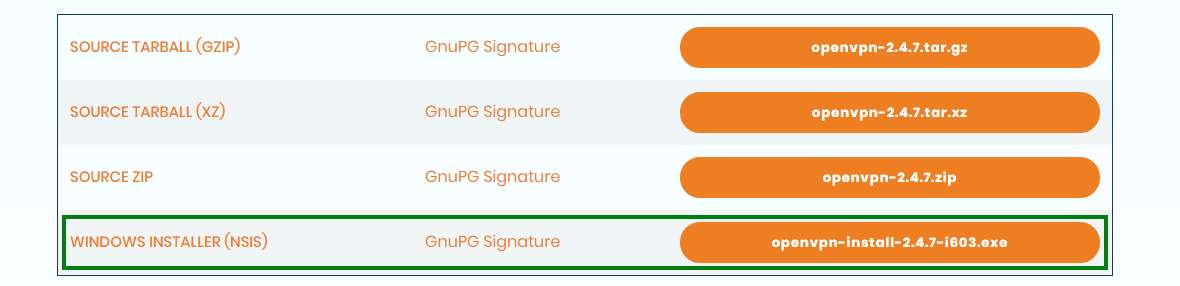
To download OpenVPN just go [here](https://openvpn.net/community-downloads/ "https://openvpn.net/community-downloads/"), and below you will find the respective download.
![](https://helpdesk.deec.uc.pt/api/v1/attachments/1640)

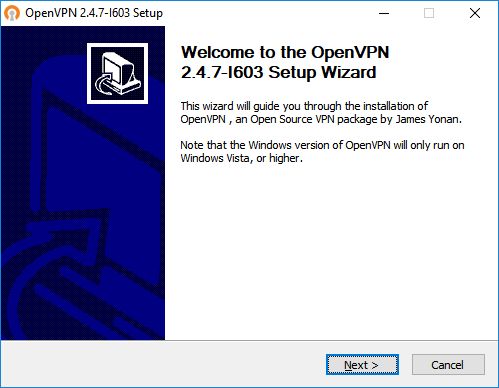
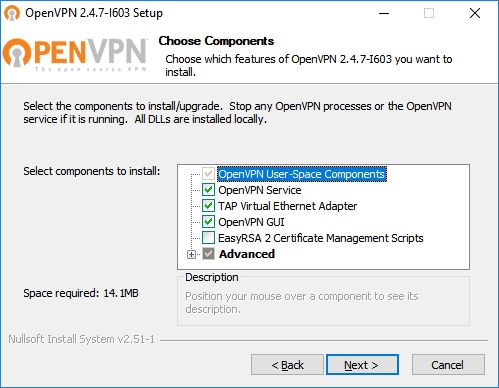
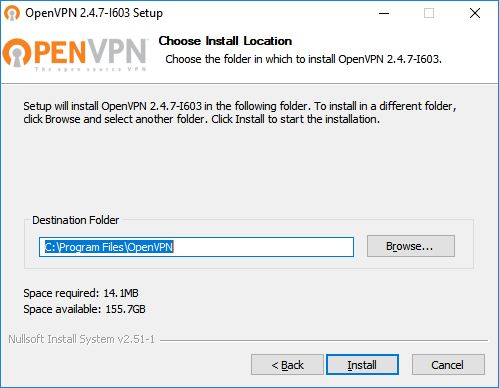
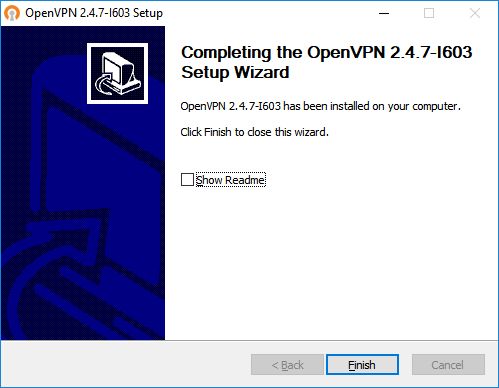
<div id="bkmrk-then%2C-perform-the-re">Then, perform the respective installation.</div><div id="bkmrk--2">![](https://helpdesk.deec.uc.pt/api/v1/attachments/1634)  
</div><div id="bkmrk--3">  
</div><div id="bkmrk--4">![](https://helpdesk.deec.uc.pt/api/v1/attachments/1635)  
</div><div id="bkmrk--5">  
</div><div id="bkmrk--6">![](https://helpdesk.deec.uc.pt/api/v1/attachments/1636)  
</div><div id="bkmrk--7">  
</div><div id="bkmrk--8">![](https://helpdesk.deec.uc.pt/api/v1/attachments/1637)  
</div><div id="bkmrk--9"><center></center><center></center><center></center><center></center><center>  
</center></div>### **Configuration:**

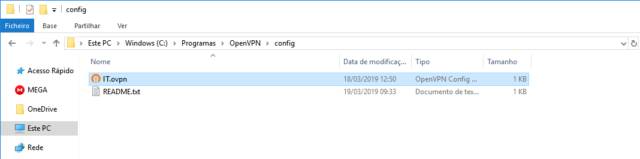
For your configuration, you should download [IT.ovpn](https://kb.deec.uc.pt/attachments/25) e movê-lo a “**C:\\Program Files\\OpenVPN\\config**”.
![](https://helpdesk.deec.uc.pt/api/v1/attachments/1638)

### **Execution**

<div id="bkmrk-to-finish%2C-you-will-">To finish, you will have to start the program “OpenVPN GUI” which, with its execution, will show an icon of a monitor with a lock on your task bar.</div>![](https://helpdesk.deec.uc.pt/api/v1/attachments/1641)

<div id="bkmrk-with-the-right-side-"><div>With the right side of the mouse over the icon, click on Connect and enter the credentials obtained by GRI.</div></div>![](https://helpdesk.deec.uc.pt/api/v1/attachments/1642)

![](https://helpdesk.deec.uc.pt/api/v1/attachments/1639)

# VPN installation manual on Ubuntu

### OpenVPN Installation, Configuration and Execution Manual on Ubuntu 18.04.2 LTS

###   


### **Introduction:**

<div class="knowledge-base-article-content richtext-content js-answer-body" id="bkmrk-this-document-will-p"><div class="knowledge-base-article-content richtext-content js-answer-body"><div><div>This document will present, step by step, the installation, configuration and execution of OpenVPN on the Ubuntu operating system.</div><div>  
</div></div></div></div>**Preparation:**

<div class="knowledge-base-article-content richtext-content js-answer-body" id="bkmrk-before-starting-the-"><div class="knowledge-base-article-content richtext-content js-answer-body"><div><div>Before starting the installation and configuration of OpenVPN on your computer, you should check the following point:</div><div>Have an account for the configuration of OpenVPN, which is requested from the Management Office of the Computer Network.</div></div></div></div>### **Installation:**

To use *OpenVPN* just run the following command “**$ sudo apt-get install network-manager-openvpn-gnome**”.

![](https://helpdesk.deec.uc.pt/api/v1/attachments/1652)

<div class="knowledge-base-article-content richtext-content js-answer-body" id="bkmrk-when-the-installatio"><div class="knowledge-base-article-content richtext-content js-answer-body"><div><div><div><div><div><div><div><div>  
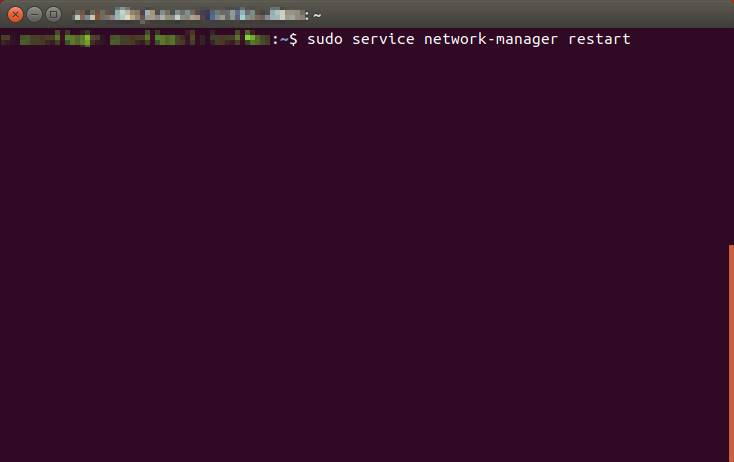
</div><div>When the installation is complete, restart the network-manager service.  
</div></div></div></div></div></div></div><div>![](https://helpdesk.deec.uc.pt/api/v1/attachments/1653)  
</div><div>  
</div><div>  
</div></div></div></div>### **Configuration:**

For your configuration, you must download [IT.ovpn](https://kb.deec.uc.pt/attachments/26). Use the mouse to go to the network manager icon to go to “***Edit Connections …***”, then “***Add a new connection***” and create a connection with “***Import a saved VPN configuration…***”.

![](https://helpdesk.deec.uc.pt/api/v1/attachments/1654)

![](https://helpdesk.deec.uc.pt/api/v1/attachments/1655)

![](https://helpdesk.deec.uc.pt/api/v1/attachments/1656)

![](https://helpdesk.deec.uc.pt/api/v1/attachments/1657)

![](https://helpdesk.deec.uc.pt/api/v1/attachments/1658)

Then select the IT.ovpn file and enter the IT credentials. If you want, you can change the Connection name to an easier name to identify the IT VPN.

![](https://helpdesk.deec.uc.pt/api/v1/attachments/1659)

![](https://helpdesk.deec.uc.pt/api/v1/attachments/1660)

 **Execution:**

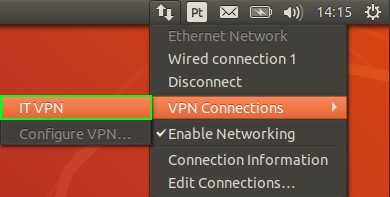
<div class="knowledge-base-article-content richtext-content js-answer-body" id="bkmrk-finally-select-the-n"><div class="knowledge-base-article-content richtext-content js-answer-body"><div><div><div>Finally select the network manager icon, go to VPN Connections and select the created VPN.</div><div>![](https://helpdesk.deec.uc.pt/api/v1/attachments/1661)</div></div></div></div></div> ![](https://helpdesk.deec.uc.pt/api/v1/attachments/1662)

# VPN installation manual on Android

<div id="bkmrk-openvpn-installation"><div>OpenVPN Installation, Configuration and Execution Manual on Android  
</div></div>### **Introduction:**

<div class="knowledge-base-article-content richtext-content js-answer-body" id="bkmrk-this-document-will-p"><div class="knowledge-base-article-content richtext-content js-answer-body"><div><div>This document will present, step by step, the installation, configuration and execution of OpenVPN on Android operating systems.</div></div></div></div>### **Preparation:**

<div class="knowledge-base-article-content richtext-content js-answer-body" id="bkmrk-before-starting-the-"><div class="knowledge-base-article-content richtext-content js-answer-body"><div><div>Before starting the installation and configuration of OpenVPN on your SmartPhone, you should check the following point:</div>- <div>Have an account for the configuration of OpenVPN, which is requested from the Management Office of the Computer Network</div>

</div></div></div>### **Installation:**

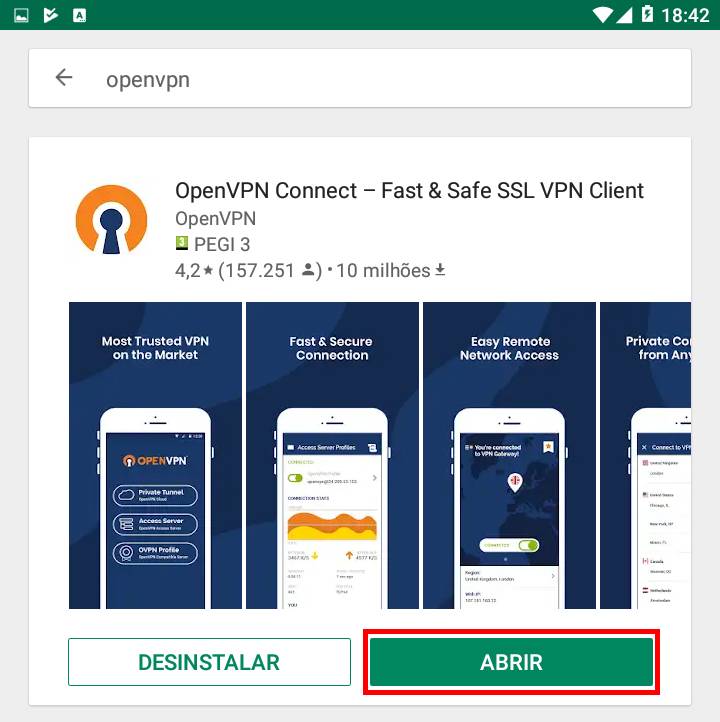
To download OpenVPN just go to the Google Store and download the following application “[OpenVPN Connect – Fast &amp; Saf SSL VPN Client](https://play.google.com/store/apps/details?id=net.openvpn.openvpn&hl=pt_PT "https://play.google.com/store/apps/details?id=net.openvpn.openvpn&hl=pt_PT")”.

### ![](https://helpdesk.deec.uc.pt/api/v1/attachments/1667)  


<div class="knowledge-base-article-content richtext-content js-answer-body" id="bkmrk--0"><div class="knowledge-base-article-content richtext-content js-answer-body"><div>  
</div><div>![](https://helpdesk.deec.uc.pt/api/v1/attachments/1668)  
</div><div>  
</div><div>  
</div></div></div>### **Configuration and Execution:**

For your configuration, you must download the [IT.ovpn](https://kb.deec.uc.pt/attachments/28) file. Then go to “OVPN Profile”.

![](https://helpdesk.deec.uc.pt/api/v1/attachments/1669)

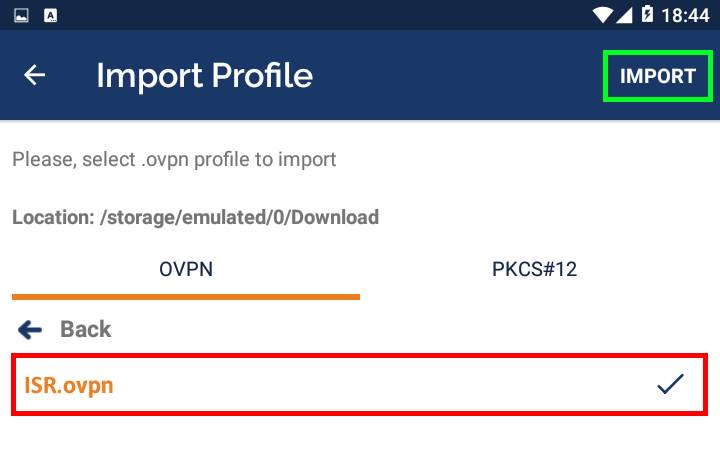
<div class="knowledge-base-article-content richtext-content js-answer-body" id="bkmrk-go-to-the-file-direc"><div class="knowledge-base-article-content richtext-content js-answer-body"><div><div>Go to the file directory, select it and do "Import".</div><div>![](https://helpdesk.deec.uc.pt/api/v1/attachments/1670)  
</div><div>  
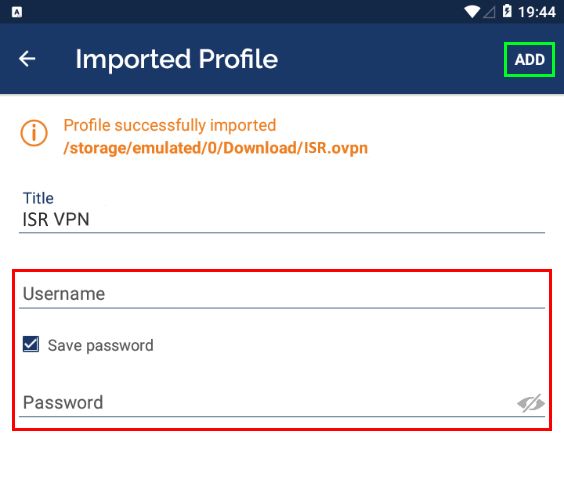
</div><div><div>To finish, you will have to insert the credentials obtained by the Management Office of the Computer Network and make "ADD".</div></div><div>![](https://helpdesk.deec.uc.pt/api/v1/attachments/1671)  
</div></div></div></div>

# VPN installation manual on iOS

### OpenVPN Installation, Configuration and Execution Manual on iOS

<div id="bkmrk-introdution%3A"><div><div>**Introdution:**  
</div></div></div>This document will present, step by step, the installation, configuration and execution of OpenVPN on the iOS operating system.

**Preparation:**

Before starting the installation and configuration of OpenVPN on your iPhone, you should check the following point:

<div id="bkmrk-have-an-account-for-"><div>- Have an account for configuring the VPN, which is requested at the Computer Network Management office.

</div></div>**Installation:**

To download OpenVPN just go to the AppStore and download the following application “*[OpenVPN Connect](https://itunes.apple.com/pt/app/openvpn-connect/id590379981?mt=8 "https://itunes.apple.com/pt/app/openvpn-connect/id590379981?mt=8")*”.

![](https://helpdesk.deec.uc.pt/api/v1/attachments/1677)

![](https://helpdesk.deec.uc.pt/api/v1/attachments/1678)

![](https://helpdesk.deec.uc.pt/api/v1/attachments/1679)

**Configuration:**

For your configuration, you must download the [IT.ovpn](https://kb.deec.uc.pt/attachments/29). Then, open the application, select the “OVPN Profile” option and accept the policies.

![](https://helpdesk.deec.uc.pt/api/v1/attachments/1680)

![](https://helpdesk.deec.uc.pt/api/v1/attachments/1681)

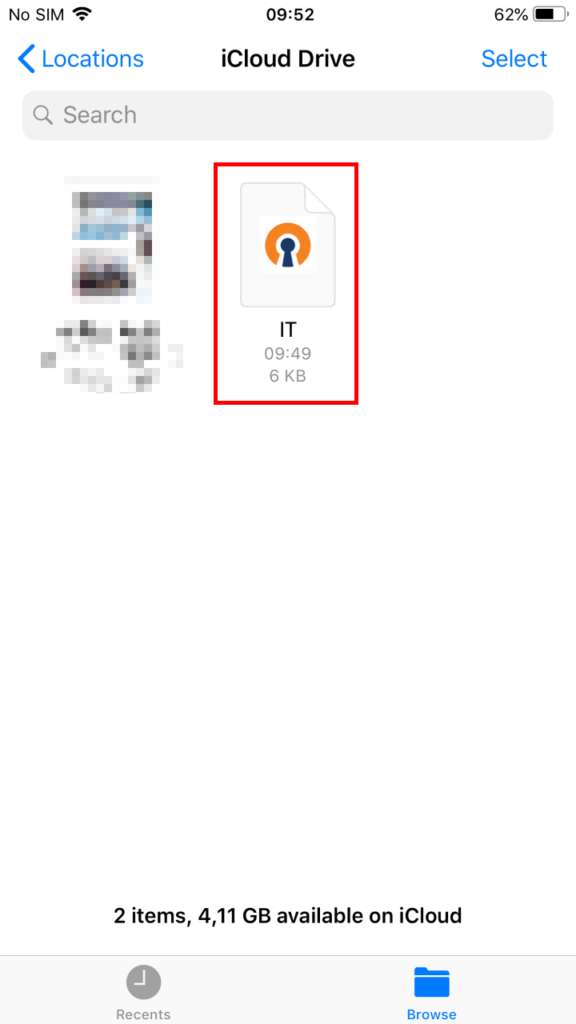
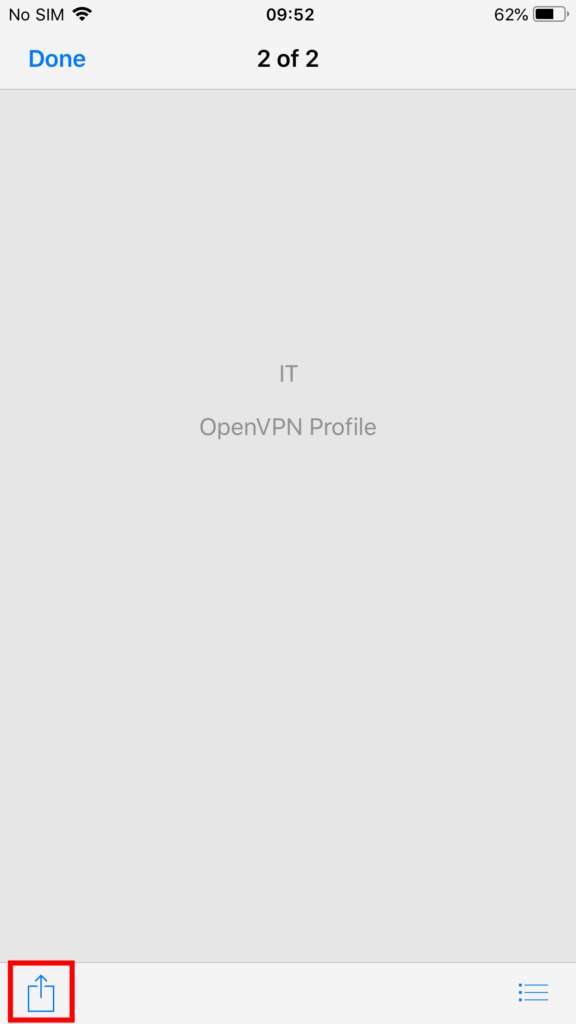
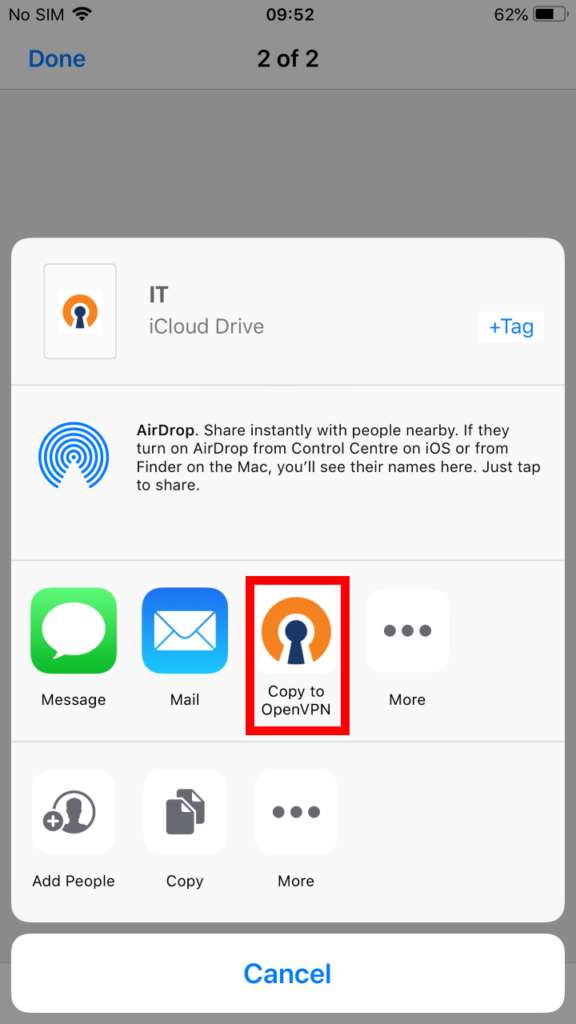
<div id="bkmrk-to-add-the-ovpn-file"><div>To add the ovpn file, just open the Files application, go to the downloaded file's directory and open it with OpenVPN.</div></div><div id="bkmrk--7">![](https://helpdesk.deec.uc.pt/api/v1/attachments/1682)  
</div><div id="bkmrk--8">  
</div><div id="bkmrk--9">![](https://helpdesk.deec.uc.pt/api/v1/attachments/1683)  
</div><div id="bkmrk--10">  
</div><div id="bkmrk--11">![](https://helpdesk.deec.uc.pt/api/v1/attachments/1684)  
</div><div id="bkmrk--12">  
</div><div id="bkmrk-execution%3A"><div>  
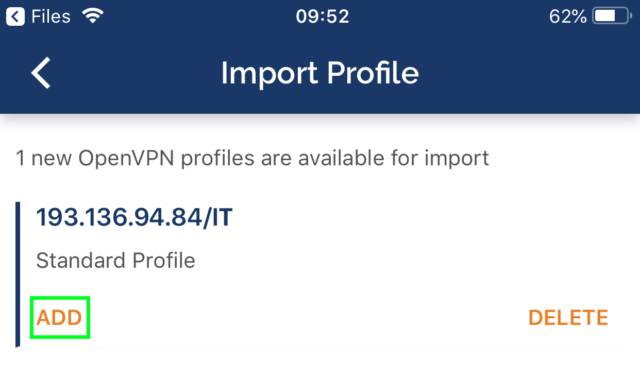
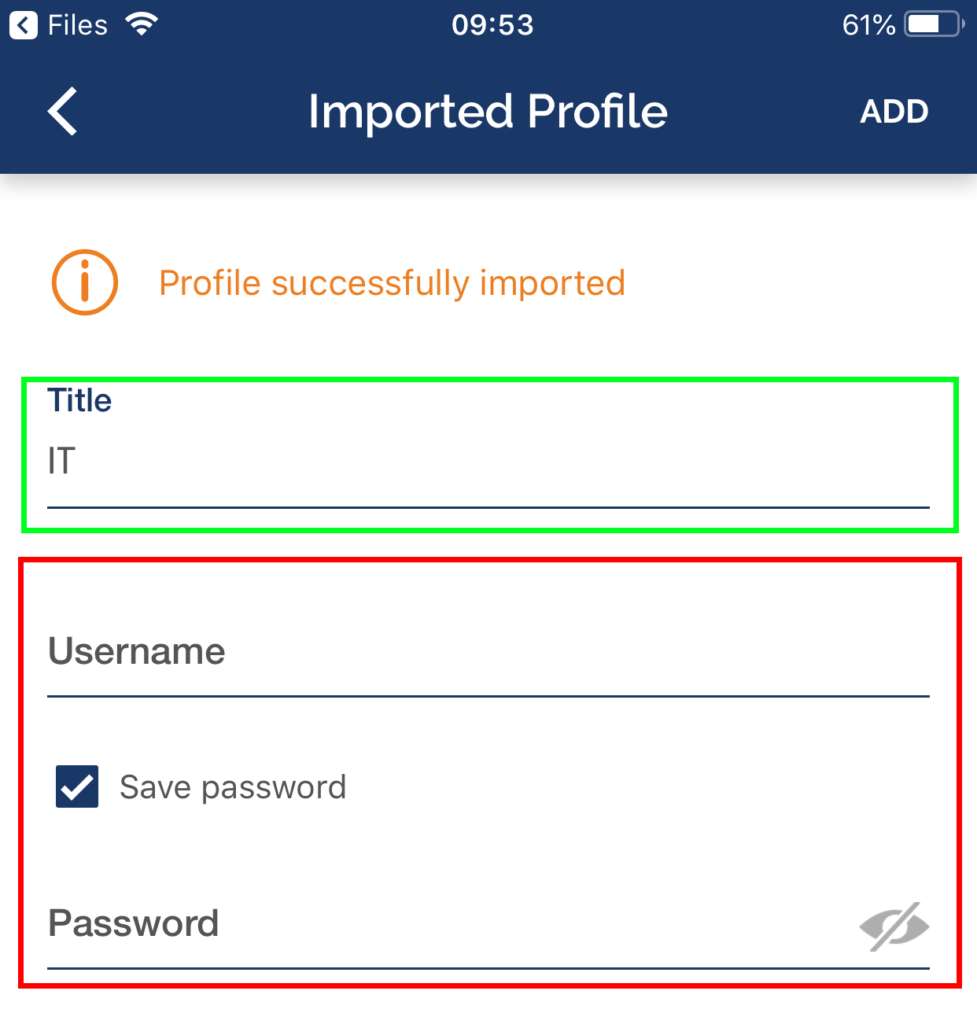
</div><div>**Execution:**</div></div><div id="bkmrk-finally%2C-select-%E2%80%9Cadd"><div>Finally, select “ADD” and enter the credentials and select “ADD” again. If you want, you can change the Title to an easier name to identify to the IT VPN.</div></div><div id="bkmrk--13">![](https://helpdesk.deec.uc.pt/api/v1/attachments/1685)  
</div><div id="bkmrk--14"><div><div>  
</div>![](https://helpdesk.deec.uc.pt/api/v1/attachments/1686)</div></div><div id="bkmrk--15"></div>

# VPN installation and configuration on mac

- [IT.ovpn](https://kb.deec.uc.pt/attachments/30)